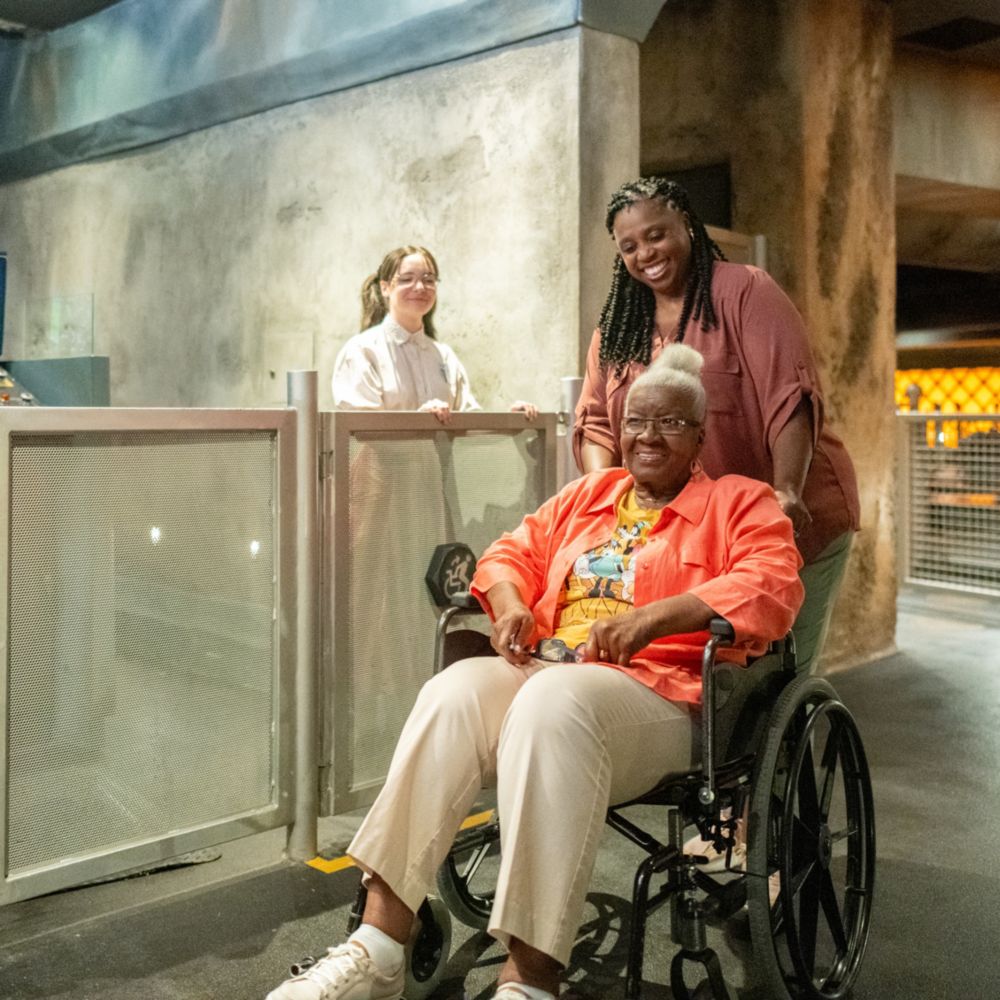
Start with a short list of what the guest needs to move through the day comfortably and safely. Note the mobility device, transfer ability, queue concerns, sensory triggers, communication needs and any questions about a service animal. That list is much more useful than searching for one accommodation that is supposed to cover everything.
Disney World has different procedures for parking, transportation, attraction queues and ride vehicles. Some details can also vary by attraction. Review the official information before the trip, then ask a Cast Member when a question depends on the attraction or that day’s operation.
Start with what the guest needs
Write down the practical questions before calling or opening a live chat. Can the guest walk a short distance? Can they transfer from a wheelchair into a ride vehicle? Will a companion provide physical assistance? Is standing in a conventional queue the central concern, or are noise, heat, darkness and changing environments the bigger issue?
Keep the answers specific. “Needs a wheelchair but can transfer independently” gives a Cast Member more to work with than “has mobility needs.” A guest may need different plans for transportation, queues and boarding.
| Question | Why it matters | Where to check |
|---|---|---|
| Will the guest use a wheelchair or ECV? | Transportation and attractions may handle the two devices differently. | Official mobility page and attraction listing |
| Can the guest transfer into a ride vehicle? | Some attractions require a transfer, while others permit a guest to remain in a device. | Attraction accessibility details |
| Can the guest walk during an evacuation? | Some experiences have ambulatory requirements. | Ask before entering when this affects participation |
| What makes a queue difficult? | The answer points toward the current queue process or another planning option. | Accessibility Services or a Cast Member |
| Which environments are difficult? | Noise, darkness, scents, motion and surprise effects vary widely. | Sensory Experience Details |
Build around the mobility device
Guests may bring a personal wheelchair or ECV, or rent one at Walt Disney World. In-park rentals are subject to availability. Treat a rental plan as a logistics question: where the device is picked up, whether it travels between locations, how a personal device will be transported and what happens if the guest must cover distance before reaching the rental counter.
Disability parking requires a valid disability parking permit, and standard parking rates apply. Most Disney transportation can accommodate mobility devices, though vehicle and device constraints vary. Check the current instructions for the transportation you expect to use.
Measure a personal device before the trip and record its width, length and combined weight when those figures are available. Keep charging equipment, rain protection and anything needed for the seat or controls easy to reach. Florida heat and sudden rain can turn a small equipment problem into a long interruption.
Official planning link: Review Disney World mobility information.
Check each attraction’s transfer rule
Attractions do not share one mobility procedure. The access categories depend on what the guest must do: remain in a wheelchair or ECV, transfer from an ECV to a wheelchair, transfer from a wheelchair or ECV into the ride vehicle, or meet an ambulatory requirement.
Check the attraction-specific rule before joining the queue. If a transfer is required, decide what help the guest can safely receive from their own party. Cast Members can explain the boarding process and point out available transfer devices, but a companion may still need to provide physical assistance.
Ask early when evacuation is a concern. The ordinary boarding process does not necessarily describe what could happen during an attraction stoppage. A clear answer can prevent the group from reaching the loading area and discovering that the attraction does not fit the guest’s needs.
Understand DAS and the other queue options
Disability Access Service, commonly called DAS, is intended for guests who cannot wait in a conventional queue for an extended period because of a developmental disability such as autism or a similar condition. It provides a return time comparable to the current standby wait. It does not provide immediate access.
Registration currently takes place through live video chat. Guests may start the process up to 60 days before the visit or use the same live video option on the day of the visit. There is no in-person registration option. The registered guest must be present, and the usual party limit is the registered guest plus three other people.
A DAS registration can cover the length of the admission or up to one year, whichever is shorter. Only one DAS return time can be held at a time. Eligibility is determined through Disney’s process, so describe the guest’s needs accurately and use the official channel for the decision.
DAS is one of several queue procedures. Attraction queue re-entry and meet-up options may help guests whose needs arise while waiting. The process can vary by attraction. Ask a Cast Member before the party splits up so everyone knows where and when to regroup.
Official action links: Read the current DAS rules and start the registration process, or review Disney’s queue options.
Plan sensory breaks before they are needed
Mark two or three possible break locations in each park before arriving. A shaded bench may work for one guest. Another may need air conditioning, less foot traffic or a companion restroom. The best location can change with weather and crowd movement, so keep more than one option.
Sensory Experience Details cover elements such as scents, lighting, vehicle speed, darkness and surprise effects. Review the details for priority attractions instead of relying on a general label such as “family ride.” Bring familiar items that help the guest manage a wait, such as headphones, a sensory toy or another calming activity.
A visual schedule can make the day easier to follow. Put fixed items such as dining reservations in first, then add a small number of possible attractions. Leave visible room for a change. Choose a meeting place and show it to everyone after entering the park.
Official planning link: Open Disney’s planning resources for neurodivergent guests.
Give the service animal its own attraction plan
At Walt Disney World, a service animal is a dog or miniature horse individually trained to do work or perform tasks for a person with a disability. The animal must remain under the owner’s control and on a leash or in a harness. Cast Members cannot take control of the animal.
Some attractions do not permit service animals to ride. Ask a Cast Member about Rider Switch or a portable kennel at those locations. Designated relief areas are available, and service animals may use an open outdoor area when the owner cleans up afterward.
Review attraction effects that could affect the animal, including loud noises, sudden motion and surprise elements. Plan for heat, water and relief time just as deliberately as the guest’s meals and breaks.
Official planning link: Check Disney World’s service animal rules and relief areas.
Save these official tools
- Disney World accessibility overview for the full set of current services and resources
- Mobility guidance for parking, transportation, rentals and attraction categories
- DAS information for current eligibility language and live video registration
- Queue access information for re-entry, meet-up and other current procedures
- Neurodivergent guest resources for visual schedules, sensory details and break planning
- Service animal guidance for attraction restrictions and relief areas
Park-day checklist
Before the trip
- List the guest’s mobility, transfer, queue, sensory and communication needs.
- Measure a personal wheelchair or ECV and save the numbers.
- Check transfer and ambulatory requirements for priority attractions.
- Review sensory details for attractions that matter most.
- Save official accessibility links and complete any advance DAS conversation if appropriate.
- Mark possible breaks, companion restrooms and a meeting place.
At the park
- Verify procedures that could have changed.
- Ask attraction-specific questions before entering the queue.
- Keep charging equipment, rain protection, water and needed supplies accessible.
- Take a break before the guest is exhausted or overwhelmed.
- Use the backup attraction or break location when the original plan no longer fits.
Frequently asked questions
Does using a wheelchair or ECV qualify a guest for DAS?
DAS is based on difficulty waiting in a conventional queue for an extended period due to a developmental disability such as autism or a similar condition. Mobility needs are handled through wheelchair and ECV access, transfer procedures and other attraction-specific support.
Can a guest remain in a wheelchair on every attraction?
No. Some attractions allow a guest to remain in a wheelchair or ECV, some require a transfer from an ECV to a wheelchair, and others require a transfer into the ride vehicle. Check each attraction.
Can a family register for DAS at Guest Relations?
DAS registration currently uses live video chat, with no in-person registration option. The video conversation can begin up to 60 days before the visit or take place on the day of the visit.
What if a guest needs to leave a queue?
Queue re-entry and meet-up procedures can address some needs. Ask a Cast Member at the attraction how that location handles the process before the party separates.
Where should we start if several needs overlap?
Write one short list covering mobility, transfer ability, queues, sensory environments, communication and service animals. Use it to review the official pages and frame specific questions for Accessibility Services or Cast Members.
For broader trip planning, use our Walt Disney World guide. Families comparing attraction participation can also review the Disney World Rider Switch guide.