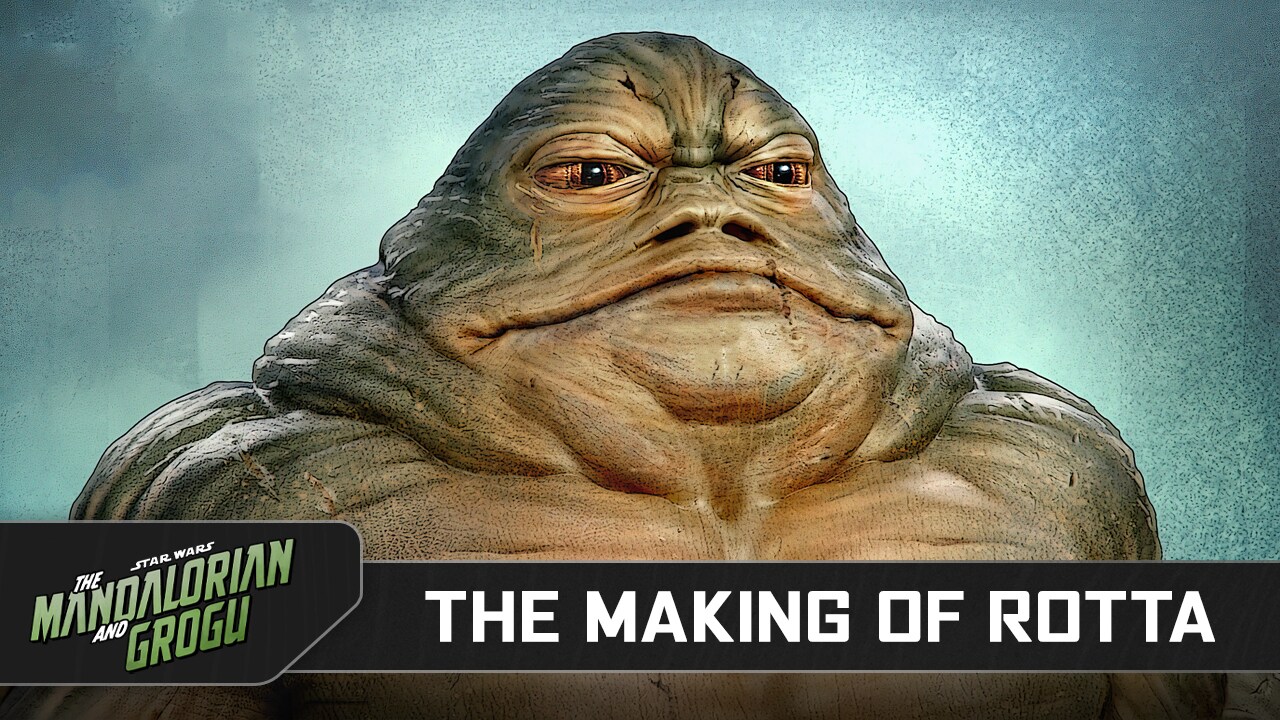
Industrial Light & Magic artists built Rotta the Hutt for The Mandalorian and Grogu. A September 2 production feature details the design, movement and performance work behind the character. The film is now available on digital, 4K Ultra HD and Disney+.
A different Hutt silhouette
ILM began with the Hutt family’s established design language, then pushed Rotta toward a younger, stronger shape. Several passes changed his face as the film took form. The final version needed to feel related to Jabba and the Hutt Twins without turning Rotta into a copy of them.
Learning how Rotta moves
Hutts had usually been shown as heavy, mostly stationary characters. For Rotta, the animators had to make a young Hutt move quickly and credibly. An elephant seal helped shape his run, while a digital skeleton, muscle system, fat layers and skin simulations gave the finished creature physical weight.
A physical stand-in for a digital creature
Richard Cetrone played Rotta on set so the camera and performers had a clear eyeline. He could carry a full-size Legacy Effects head when the scene needed a stronger physical reference. Rotta is only a little over six feet tall, but the team still wanted his bulk to register in every movement.
The quieter scene mattered
Rotta also had to work outside the fight scenes. His beach scene with Grogu gives the character room to be curious and sympathetic. ILM animation supervisor Hal Hickel calls that moment the heart of the movie.
Sources: the Rotta production feature on StarWars.com and the official film page.
Image: StarWars.com.