Disney / Ride Technology

Disney Patent Application Details a Guide-Wire Ride System

Disney’s Nov. 26 patent application describes sensors that track a ride vehicle’s position and a controller that can adjust its steering or speed.

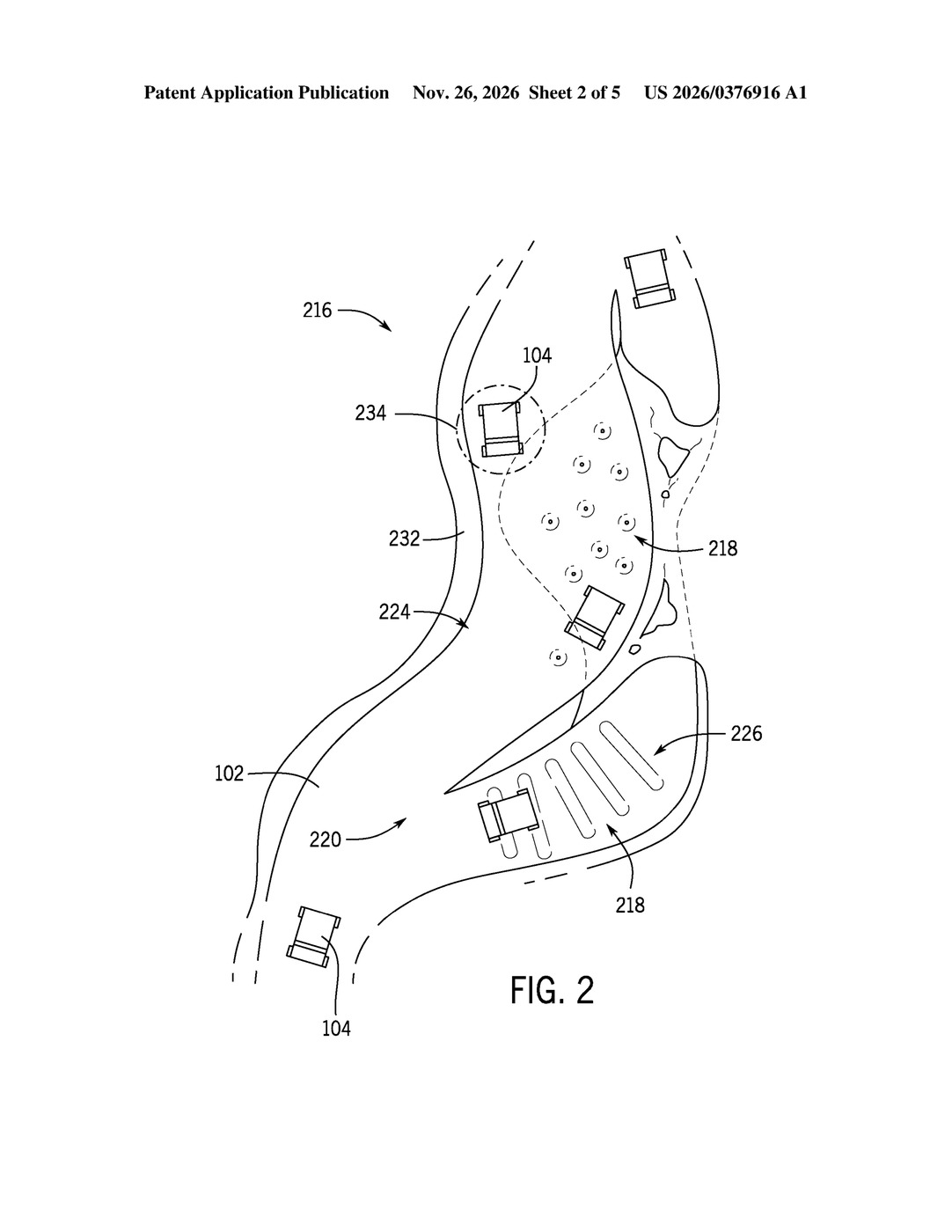
Patent map of vehicles taking different paths through a ride course
Image Credit: U.S. Patent and Trademark Office

The U.S. Patent and Trademark Office published a Disney patent application on Nov. 26 that spells out how a ride vehicle could use a guide wire to find its way over uneven terrain. Sensors at the front and rear would measure how far the vehicle is from the wire. A controller could then adjust its position, speed or steering.

The wire gives the vehicle a route to follow when a rider leaves the controls alone. It also gives the controller a way to tell how far the vehicle has strayed. Disney’s application describes a limit that can change with track conditions, plus an option to slow the vehicle on a grade.
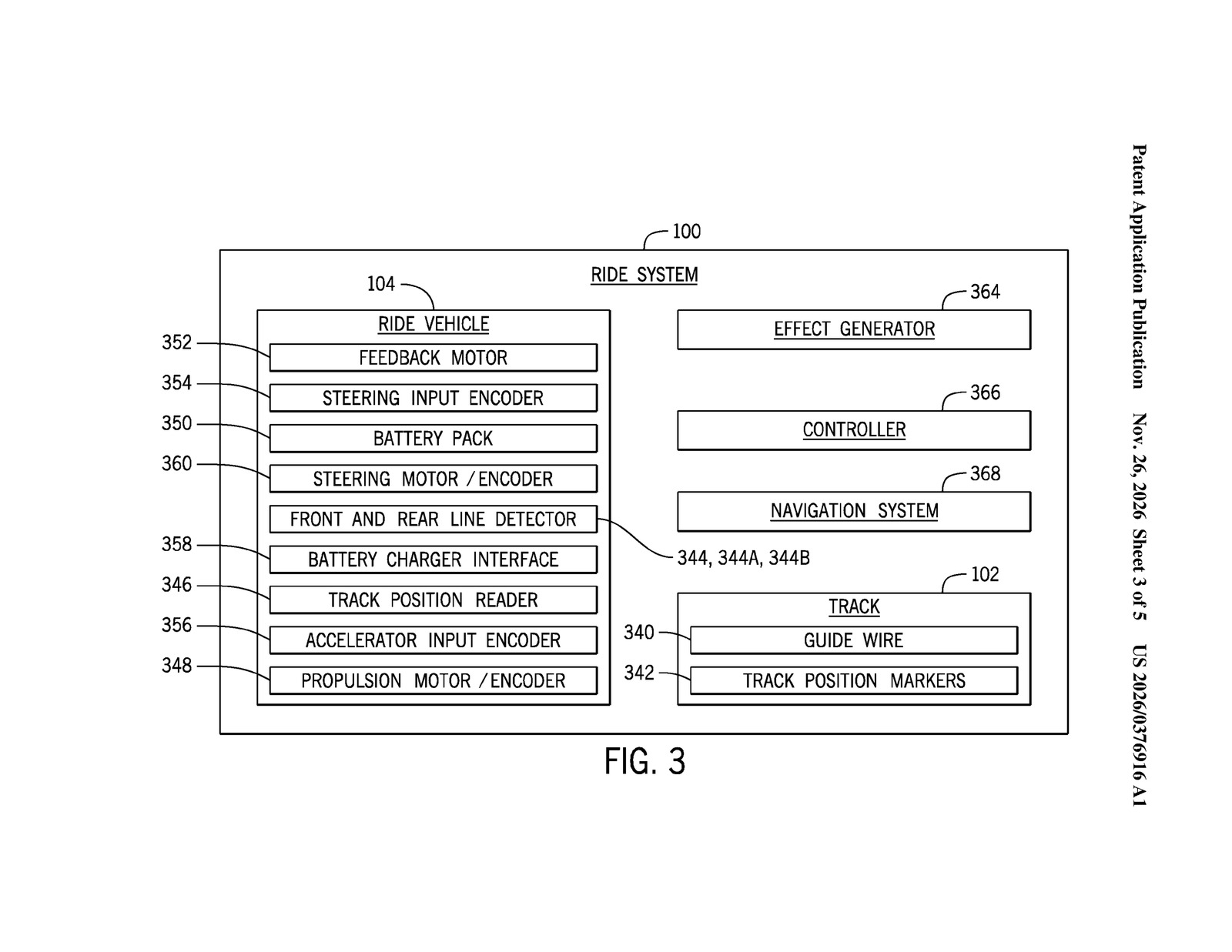
Diagram labeling front and rear detectors, the guide wire and vehicle components
Figure 3 identifies the front and rear detectors and the guide wire. Image Credit: U.S. Patent and Trademark Office

Disney already holds an August patent for the same ride concept. Its first claim centers on riders choosing a path and controlling their vehicles while a central controller keeps the fleet spaced apart. The new application puts the wire and the two sensors at the center of its first claim. It also asks for protection for a method of managing multiple vehicles on the same course.

Patent Drawings
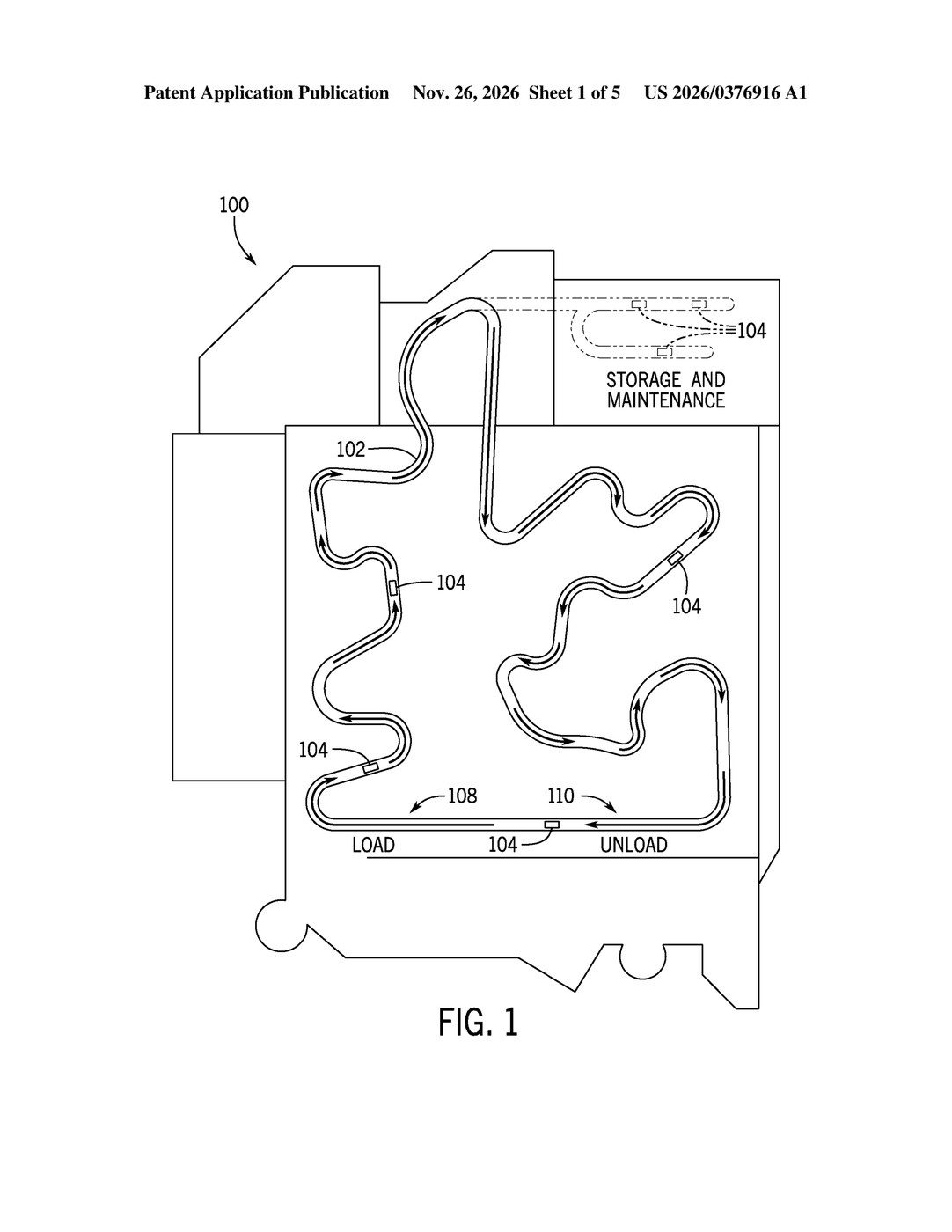
Overhead drawing of a ride layout with loading, unloading and storage areas
Figure 1 shows a possible ride layout, including where vehicles load, unload and go for maintenance. Image Credit: U.S. Patent and Trademark Office
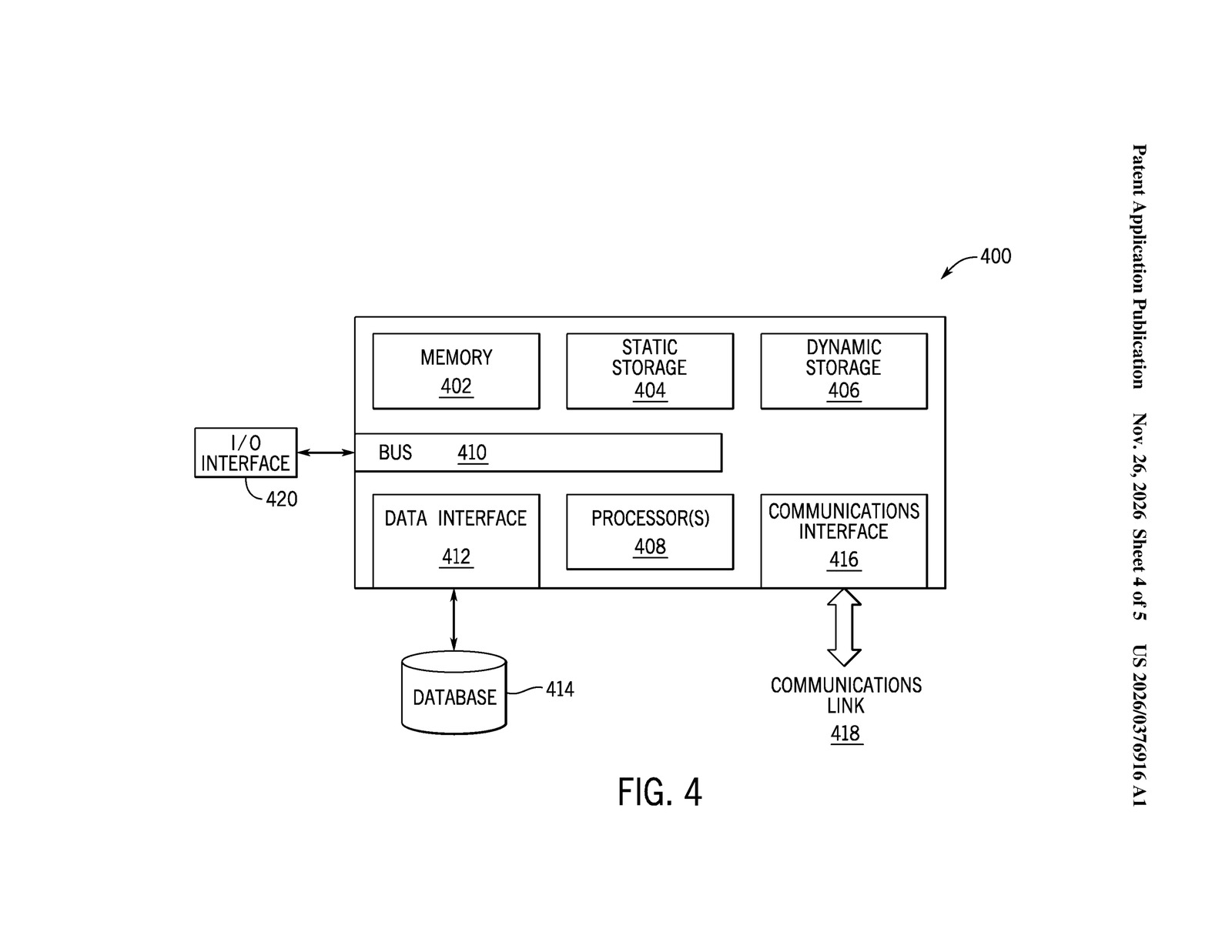
Patent diagram of processor, memory and communication components
Figure 4 shows the computer hardware. Image Credit: U.S. Patent and Trademark Office
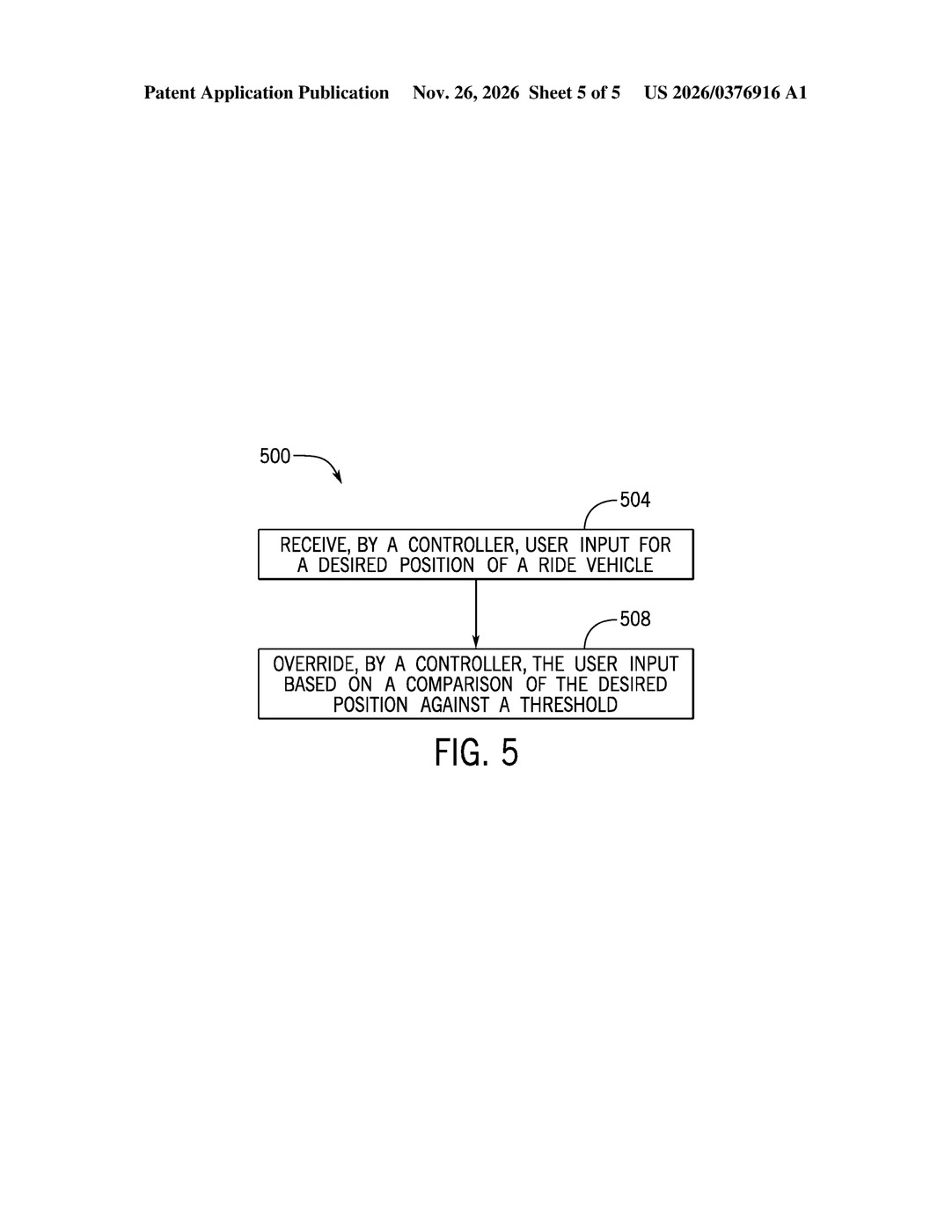
Flowchart showing how the controller can override a rider’s input
Figure 5 shows how the controller decides whether to override a rider’s input. Image Credit: U.S. Patent and Trademark Office

Related Stories